The world is so wonderfully complex that we can never fully apprehend it. Most of my conceptual work is created with the hope that they can allow the audience to realize something new about this complexity. That their reality can expand, just a little bit.
On this page you can read about some of the more elaborate projects. Most of my regular concerts are also shaped carefully to create a conceptual whole.
You can find a full list of concerts and performances on this page.
I was again asked to host the course “Multi-Artistic lab with the MA students at University of Stavanger, Faculty of Performing Arts. This year we looked at the information that can be drawn out of our own practices. What shapes the ways we understand and react to our collaborators? The final performance was designed to show and challenge the students to listen actively and react with intention.
Stavanger, September 7-10, 2026
I was asked to lead the course “Multi-Artistic lab” with the MA students at Faculty of Performing Arts, University of Stavanger. This included students from the Classical, Jazz and Dance programs. We explored new perspectives on our own practice, looking for new ways of understanding our own art making. Through various group exercises the students were challenged to improvise collectively, following different principles describing possible relationships between the music and dance.
The project was mostly practical, but the exercises were based on graphical notations and sound theories and ideas of André Jolivet and Helmut Lachenmann.
Stavanger, August 18-22, 2025
Stavanger Cathedral and the city of Stavanger celebrate 900 years in 2025. As part of the city festival, I was asked to stage the cathedral as one of five important places that shaped the city’s identity. I wanted our contribution to demonstrate how the cathedral throughout all times has invoked awe and wonder. I chose three modalities in which we experience these two mysterious emotions, forming three sub-projects.
The first sub-project focused on awe and wonder induced through our senses. This was staged through almost three hours of organ improvisations, telling stories from the imagined library of the building. See the project VI ER I ET STORT ROM (We are in a big room) below for more details.
The second sub-project discussed the relationship between awe, wonder, and wisdom. This was presented in a performance for three actors, choir, and organ. See the project KAN DU GRIPE VINDEN? (Can you grasp the wind?) below for more details.
The third sub-project was dedicated to the emotional and abstract nature of awe and wonder. I hired sound artist John Derek Bishop to create installations for the church’s surroundings. Using transformed recordings of the cathedral organ, the cathedral choir, and the carillon, he created partly recognizable soundscapes. The installations were presented in three-dimensional setups in the city park and streets surrounding the cathedral. Bishop is also a great live-sampling artist, which became a part of the first sub-project. Therefore, see also the project VI ER I ET STORT ROM (We are in a big room) below.
Every room is a library of knowledge and stories. The materials that build the room come from different places and have been through various processes before they ended up exactly where they are now. These materials define certain properties that give the room its unique identity; everything we experience there happens through interaction with these surroundings. Hidden in the walls lie stories beyond what we could imagine and connections no one will ever discover. And when we enter the room, we become a part of the building’s memory.
In this project, I told imagined stories from the library of Stavanger Cathedral. Three materials, three properties, and three experiences are explored through solos, dialogues, and tuttis. For example, we visit the quarry on the last day before departure, and hear the rocks singing farewell to the forest. Then we see them again as they are carved into their correct shapes. Some centuries later, we pop by and learn that when no one sees, the large columns shake their shoulders to relieve themselves from the heavy carrying.
Everything that was played inside the cathedral was live-sampled by John Derek Bishop outside at the cathedral square. This created a continuous sound environment for the visitors walking in and out of the church, and every now and then, the transformed sounds were heard through the walls or when the doors opened.
This project was performed daily April 24-27 in Stavanger Cathedral by organists Henriette Eide Skagen, Nils Henrik Asheim, Arnfinn Tobiassen, and myself.
Would you recognize Wisdom if you came across it?
This question was at the core of the theatre I made for the cathedral’s 900th anniversary. I wanted to create a collective exploration of wisdom, awe, and wonder, using texts from the biblical wisdom literature, found in the books of Job, Ecclesiastes, Psalms, and Proverbs. These ancient texts were written by people like us, looking for understanding, direction, and a sense of meaning.
We meet a young man, entering this room, looking for Wisdom. There is a child there, and they start discussing what Wisdom is, and why the man is searching for it. Later, an old woman joins them, and they all share questions and perspectives.
The choir and organ act to a great extent as sounding scenography, colouring the words spoken by the actors, giving room for thought and reflection. In addition, the choir has a commentating role in choral pieces.
«Can you grasp the wind?» was performed three times a day, April 24-27, 2025, at Stavanger Cathedral, by Stavanger Cathedral Choir, cathedral organist Arnfinn Tobiassen, and actors Alida Riiber Rødsand, Erika Tellnes Eiene, Tor Einar Gudmestad, and Mette Arnstad. The staging was done together with director Berit Aarrestad and dramaturg Nina Godtlibsen.
The heart is the home to our emotions. You can have a change of heart or a heart of gold. You can be light-hearted, warm-hearted, stony-hearted, half-hearted, or open-hearted. Your heart can get stolen or broken. You can even wear your heart on your sleeve.
With this in mind, it should be no surprise that the heart is an important figure in the cantatas of J. S. Bach. These were written for specific Sundays in the church’s liturgical year, with texts meant to cover the whole human experience. For this project, I combined parts of different cantatas into a new “Oratorio of the Heart”. The starting point was cantatas containing the word herz (German for heart). This way, we explored emotions like joy, pain, despair, gratitude, sorrow, and expectation through the expressive music of Bach. I decided to minimize the use of soloists, having only one soprano soloist doing some arias and extracts of a solo cantata. THis made the project highly engaging for the choir, much more than it would be performing just one cantata.
The audience’s experience was shaped already from their arrival, in unexpected ways, causing them to go through many emotions usually, including a few ones not usually found in a concert setting. They were also given a small lexicon of key words and phrases in the texts, in addition to the full lyrics.
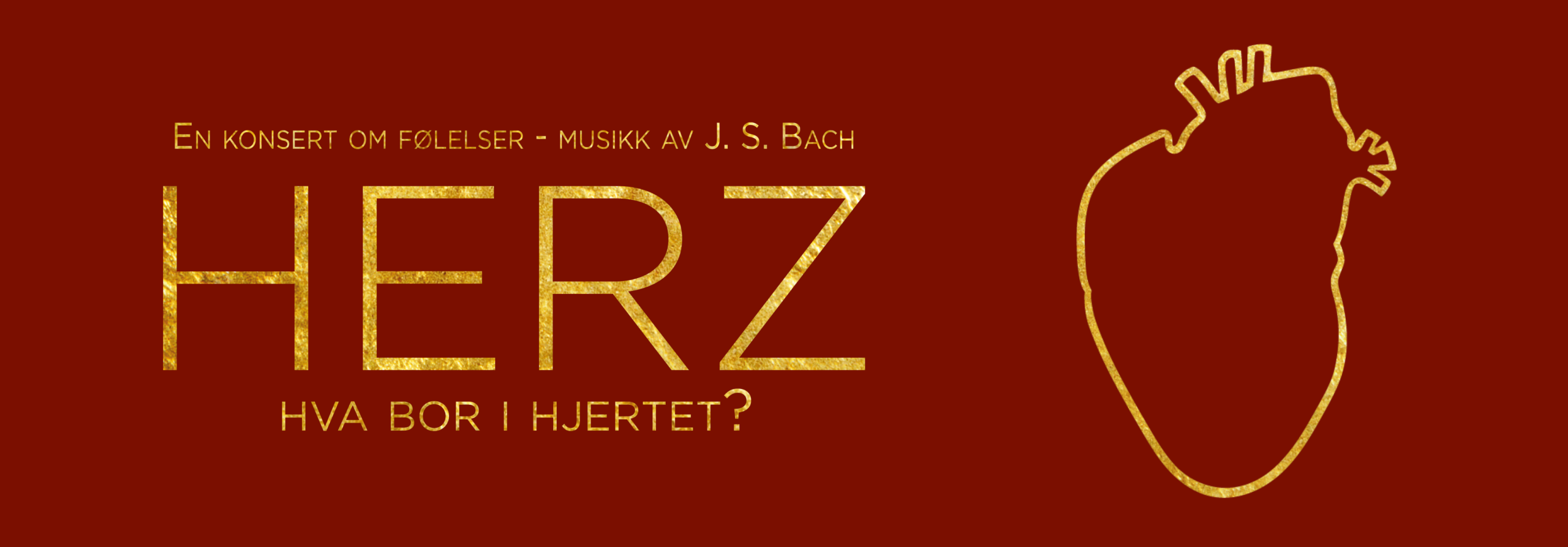
The repertoire included music form:
- O ewigkeit, du Donnerwort (BWV 60)
- Himmelskönig sei willkommen (BWV 182)
- Ich hatte viel Bekümmernis (BWV 21)
- Erfreut euch, ihr Herzen (BWV 66)
- Mein herze schwimmt in Blut (BWV 199)
- Herz und Mund und Tat und Leben (BWV 147)
- Die himmel erzählen die Ehre Gottes (BWV 76)
Stavanger Cathedral Choir and Nivalis Baroque Orchestra, at St. Petri Church, Stavanger, April 2024.
For my master’s recital, I wanted to play Cinq Méditations sur l’Apocalypse by the French composer and organist Jean Langlais. The five movements are inspired by the Book of Revelation in the Bible, with its prophecies and foreboding visions of the end of times.
Unfortunately, the coronavirus pandemic forced me to to scale everything to fit a small group of three friends and a jury of five professors.
First, I welcomed them all to the recital and told some key facts about the music before giving out a stack of colourful program cards with the texts for each movement. Then, just before heading up to the organ, I gave each one a small extra poem and instructed them to read it out to each other in between the movements.
Uranienborg church, Oslo, June 2, 2020.
I love the music of Olivier Messiaen. His music is colourful and rhythmic, and it is a joy to perform! I wanted to introduce this wonderful music to a new audience. At the start of the concert, I presented the music through a short presentation, before suggesting different ways of listening on other axes than the often intrusive “I like this vs. I don’t like it”. I recommended sensing the density, colours, registers, emotional response, watching the church art, etc. I also included extended scripture readings in between the movements, giving a broader context than the traditional few verses. The program folder was a creative mix of drawings, interesting facts, and analytical hints.
Hønefoss church, Hønefoss, January 2019
This was my second organ improvisation concert. The concept was quite similar to the first one, but the questions were projected onto the white walls of the church. The seats were organized in various ways, allowing the audience to sit facing the organ, each other, etc. Also, I included a recording playing in the background, with sounds of water, footsteps, and birds joining the music every now and then.
Majorstuen church, Oslo, October 2020
This was my first organ improvisation concert. Listeners were given a program card with a timeline. Every ten minutes, they were given a question, and the music changed accordingly. The questions were intended to be starting points for reflection about both existential and mundane topics. The music had a meditative character, alternating between melodic, static, and minimalistic textures. The audience was free to sit, lie down, or wander around in the church.
Bekkelaget church, Oslo, January 2019